Every child displays behaviours that can be difficult for parents to understand. A child may cry, shout, refuse instructions, throw objects, hit others or withdraw from an activity. While these behaviours can be stressful, they rarely happen without a reason.
Behaviour is often a form of communication. A child may be trying to escape an overwhelming situation, gain access to something, seek attention, meet a sensory need or express an emotion they cannot yet explain.
The ABC paradigm gives parents a simple way to look beyond the behaviour and understand what may be contributing to it.
What Is the ABC Paradigm?
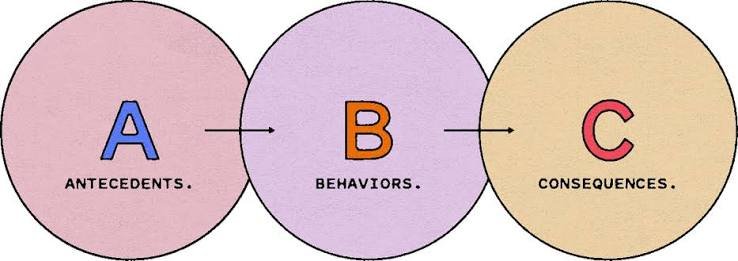
ABC stands for Antecedent, Behaviour and Consequence.
A is for Antecedent
The antecedent is what happened immediately before the behaviour. It may include an instruction, a change in routine, the removal of an item, a difficult task, a loud environment or being told to wait.
It is also important to consider less obvious factors. The child may have been tired, hungry, unwell, anxious, confused or overwhelmed by sensory input.
B is for Behaviour
The behaviour is the specific action that can be seen or heard. Parents should describe exactly what occurred without using judgemental labels.
Instead of writing, “My child was naughty,” a clearer description would be, “My child shouted, pushed the chair and dropped to the floor.”
Objective descriptions make it easier to notice patterns and determine which skills or supports the child may need.
C is for Consequence
The consequence is what happened immediately after the behaviour. It does not necessarily mean punishment. It simply refers to the response or outcome that followed.
For example, the parent may have removed the task, provided comfort, offered an item, given attention or allowed the child to leave the situation.
Consequences matter because they may unintentionally influence whether a behaviour happens again.
Looking at Behaviour Differently
Imagine that a parent asks a child to turn off the tablet and get ready for a bath. The child screams, throws the tablet onto the couch and falls to the floor. The parent then returns the tablet to calm the child.
Using the ABC paradigm, the situation could be recorded as:
Antecedent: The child was asked to stop using the tablet and begin bath time.
Behaviour: The child screamed, threw the tablet and dropped to the floor.
Consequence: The tablet was returned for another ten minutes.
This does not mean the parent caused the behaviour or responded badly. Most parents make quick decisions during stressful moments. However, the ABC record shows that the child may have learned that screaming delays the transition and results in more tablet time.
The purpose of ABC is not to blame the child or parent. It is to identify patterns and develop a more helpful response.
Change What Happens Before the Behaviour
Once parents recognise common triggers, they can make changes before the situation becomes overwhelming.
For the tablet example, the parent could:
- Use a visual schedule showing tablet time followed by bath time
- Give a five minute and two minute warning
- Use a timer so the ending is predictable
- Offer a choice between two bath toys
- Allow the child to press the button that turns off the tablet
- Praise the child for completing any part of the transition
These strategies do not remove every boundary. They make expectations clearer and give the child greater predictability and involvement.
Prevention is often more effective than waiting for behaviour to escalate.
Teach an Alternative Skill
Reducing a behaviour is difficult if the child does not have another way to meet the same need.
If a child screams to request more time, parents can teach them to say, sign or show a card that communicates, “More time, please.” The parent may then offer one additional minute when appropriate.
If a child hits to escape a noisy environment, they might be taught to request a break, use headphones or move to a quieter space.
If a child throws objects when a task feels too difficult, they could learn to ask for help or request that the task be divided into smaller steps.
The alternative behaviour should be safe, practical and easier for the child to use than the behaviour of concern.
Respond Calmly and Consistently
What happens after a behaviour can influence future learning. Parents should remain as calm as possible, use simple language and prioritise safety.
During significant distress, lengthy explanations are unlikely to help. A short response such as, “You are safe. I am here. We can talk when your body is calm,” may be more effective.
Once the child is regulated, the parent can acknowledge the emotion, restate the boundary and practise the alternative skill.
Consistency is important, but consistency does not mean responding rigidly. Children may require different support depending on their age, communication ability, disability, sensory needs and level of distress.
Reinforce the Behaviour You Want to See
Parents often give attention when something goes wrong but may unintentionally overlook moments when their child is coping well.
Notice and acknowledge positive behaviour clearly. Instead of saying only, “Good job,” try:
“You turned off the tablet when the timer finished. That was responsible.”
“You asked for a break instead of throwing the toy. Thank you for telling me what you needed.”
Specific praise helps the child understand which behaviour was helpful. Other forms of reinforcement may include attention, shared play, access to a preferred activity or a sense of achievement.
Keep a Simple ABC Record
Parents can record:
- The date, time and setting
- What happened before the behaviour
- What the child did
- What happened immediately afterwards
- How long the behaviour lasted
- Possible factors such as tiredness, hunger, illness or sensory overload
One event may not reveal much. Several records collected over time may show that the behaviour commonly occurs during transitions, difficult tasks, noisy environments or periods of waiting.
ABC information should be used to develop understanding, not to label or punish the child.
When to Seek Professional Support
Families should seek professional guidance if a behaviour is frequent, increasing, causing significant distress or creating a risk of injury.
A general practitioner, paediatrician, psychologist, behaviour support practitioner or relevant allied health professional can help identify possible developmental, communication, sensory, emotional or medical factors.
Sudden changes in behaviour may also require medical attention, especially when pain, illness, sleep difficulties or medication changes could be involved.
The Most Important Message
The ABC paradigm helps parents move from asking, “How do I stop this behaviour?” to asking, “What is my child communicating, and what support or skill may be missing?”
Good parenting is not about responding perfectly every time. It involves observing, learning, adjusting and repairing when things do not go as planned.
When parents understand triggers, teach safer alternatives and respond consistently, they create opportunities for their child to develop communication, emotional regulation and independence.
The goal is not simply to control behaviour. It is to help the child feel understood, supported and capable of managing difficult situations safely.
Sources
NDIS Quality and Safeguards Commission: Behaviour support
Raising Children Network: Encouraging positive behaviour
Healthdirect Australia: Managing behaviour in children
#PositiveParenting #ChildBehaviour #ParentingTips #BehaviourSupport #ChildDevelopment